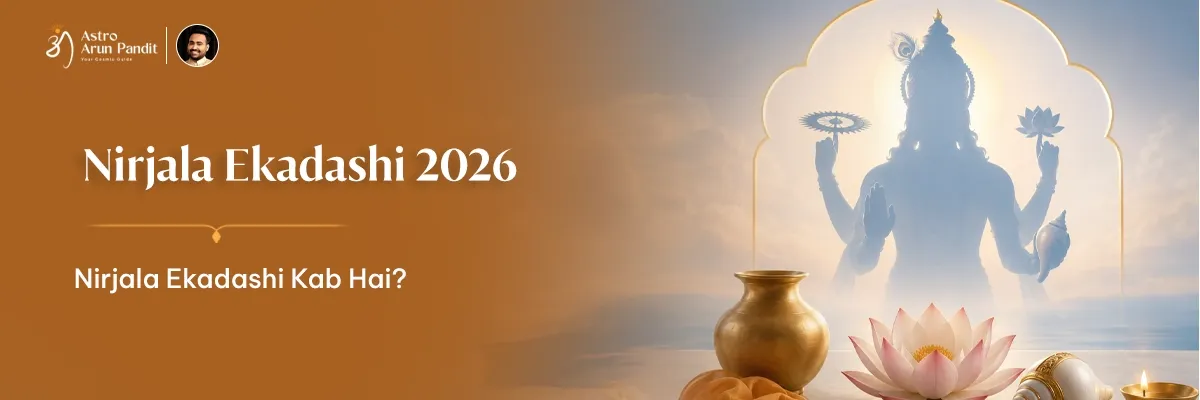
Nirjala Ekadashi 2026 will be observed on Thursday, 25 June 2026. According to the Hindu Panchang, this Ekadashi falls during the Shukla Paksha of the Jyeshtha month. Among all Ekadashis, Nirjala Ekadashi is considered one of the most powerful and involves strict fasting. Devotees observe the Nirjala Ekadashi vrat without drinking water. The word “Nirjala” itself means “without water". This is why Nirjala Ekadashi fasting is known for discipline, devotion, and spiritual focus. According to Vedic beliefs, devotees worship Lord Vishnu on this day and chant Vishnu mantras with devotion. People also perform acts of charity by donating water, food, clothes, and fruits on this sacred day.
Nirjala Ekadashi Kab Hai?
If you are the one who wishes to know nirjala ekadashi kab hai, then the answer is:
Nirjala Ekadashi 2026 is on Thursday, 25 June 2026.
This Ekadashi is also known as:
Bhimseni Ekadashi
Pandava Ekadashi
Bhima Ekadashi
The vrat is linked with Bhima from the Mahabharata. According to ancient scriptures, Bhima found it difficult to observe all Ekadashi fasts throughout the year. Sage Ved Vyasa advised him to keep only one strict fast without water, which later became famous as nirjala ekadashi vrat.
What Is Nirjala Ekadashi?
Many people ask, what is nirjala ekadashi and why it is so important?'
Nirjala Ekadashi is a sacred fasting day dedicated to Lord Vishnu. It comes once every year and is observed with devotion by Vishnu devotees across India. Like other Ekadashi fasts, this vrat is traditionally observed without food and water for the entire day.
In Vedic astrology and spiritual traditions, observing Ekadashi, one gets support for self-control, devotion, and inner discipline. Devotees spend the day chanting Vishnu Sahasranama, reading scriptures related to lord Vishnu, and listening to nirjala ekadashi vrat katha.
Nirjala Ekadashi Vrat Importance
The importance of the nirjala ekadashi vrat is mentioned in many ancient Hindu texts. Devotees believe this vrat has the spiritual benefit of observing all 24 Ekadashis in a year.
Some common spiritual practices followed during Nirjala Ekadashi fasting are:
Worshipping Lord Vishnu
Chanting “Om Namo Bhagavate Vasudevaya”
Offering Tulsi leaves
Reading Vishnu Sahasranama
Donating water and food
Visiting Vishnu temples
Many devotees follow the fast strictly; however, others observe the vrat according to their health and comfort level.
Nirjala Ekadashi Fast Rules
The nirjala ekadashi fast rules are simple but strict. Devotees usually begin preparations from Dashami Tithi itself.
Common Nirjala Ekadashi rules are:
Wake up early before sunrise
Take a bath and wear clean clothes
Worship Lord Vishnu with Tulsi and flowers
Avoid grains and tamasic food
Observe fasting without water (if physically comfortable)
Spend the day in prayer and bhajan
Break the fast during Parana time, i.e, on the next day
Note: People who cannot keep a strict waterless fast may follow a simpler vrat according to their health conditions.
Nirjala Ekadashi Puja Vidhi
The puja process for nirjala ekadashi vrat is easy to understand.
Simple Puja Steps
Clean the puja area in the morning
Place Lord Vishnu’s idol or picture
Offer yellow flowers and Tulsi leaves
Light a ghee diya
Chant Vishnu mantras
Read nirjala ekadashi ki katha
Offer fruits and sattvic bhog to lord Vishnu
Donate food or water to needy people
Many devotees also prefer participating in online Vishnu pujas for guidance and proper Vedic rituals through Astro Arun Pandit Ekadashi Online Puja.
Nirjala Ekadashi Vrat Katha
The story of nirjala ekadashi vrat katha is connected to Bhima from the Mahabharata. Bhima loved food and found it difficult to observe every Ekadashi fast. Hence, he approached Sage Ved Vyasa and asked for an easier way to receive the spiritual benefits of Ekadashi. Ved Vyasa advised him to observe one strict fast every year on Jyeshtha Shukla Ekadashi without food and water.
Bhima followed this vrat with complete devotion to Lord Vishnu. Since then, this Ekadashi became known as Bhimseni Ekadashi or Nirjala Ekadashi.
Listening to nirjala ekadashi ki kahani is considered a remarkable part of the vrat.
Nirjala Ekadashi Ki Katha
The nirjala ekadashi ki katha teaches discipline and devotion, which helps us to surrender to Lord Vishnu. It also reminds devotees that faith and sincerity are more important than external rituals.
During the vrat, devotees often gather with other members and read the nirjala ekadashi vrat katha, and also sing bhajans that are dedicated to Lord Vishnu.
Astrological Significance
In Vedic astrology, Ekadashi days are connected with mental clarity and spiritual discipline. Many astrologers believe that observing nirjala ekadashi fasting with devotion may help a person to stay focused and spiritually balanced.
In addition to that, during this day devotees do - vishnu mantra chanting, charity and donation, meditation, reading sacred texts and practising self-discipline.
For spiritual guidance and Ekadashi related rituals, devotees also explore services and festival updates on Astro Arun Pandit.
Nirjala Ekadashi And Charity
Donation plays a very important role during nirjala ekadashi vrat. People donate:
Water pots
Fruits
Clothes
Fans
Food grains
Sweets
In many traditions, offering water to travellers and needy people during the summer is considered highly auspicious on Nirjala Ekadashi.
Foods Allowed Before Fast
Before starting nirjala ekadashi fasting, devotees usually eat simple sattvic food on Dashami.
Common foods include:
Fruits
Milk
Sabudana (Sago)
Dry fruits
Singhara flour dishes
It is preferable to avoid onion, garlic, rice, and non-vegetarian food.
How To Break Nirjala Ekadashi Fast: Parana
Parana means breaking the fast. Devotees break the fast on Dwadashi Tithi after worshipping Lord Vishnu.
Usually, devotees:
Offer water to Tulsi
Pray to Lord Vishnu
Eat simple sattvic food
Donate food before eating it themselves
Following the correct Parana timing is considered important in traditional practices.
Ekadashi Guidance And Online Puja
Devotees who wish to perform Vishnu puja with proper rituals can also explore the online puja services offered by Astro Arun Pandit Ekadashi Services. The platform also shares useful information related to Ekadashi vrat, Hindu festivals, and Vedic rituals.
Conclusion
Nirjala Ekadashi 2026 will be observed on 25 June 2026, Thursday. This sacred vrat is specifically dedicated to Lord Vishnu. It is known for devotion, discipline, prayer, and charity. Whether you observe a strict fast or a simple vrat based on your health conditions, the day is mainly about spiritual and positive intentions.
Listening to the nirjala ekadashi vrat katha, chanting Vishnu mantras, helping others by donating things, and spending time in devotion are considered meaningful ways to observe this sacred Ekadashi.
Nirjala Ekadashi 2026 Date And Time
| Event | Date & Time |
|---|---|
| Ekadashi Tithi Begins | 24 June 2026 – 06:13 PM |
| Ekadashi Tithi Ends | 25 June 2026 – 08:09 PM |
| Nirjala Ekadashi Vrat | 25 June 2026, Thursday |
| Parana Time | 26 June 2026 – 05:38 AM to 08:43 AM |