

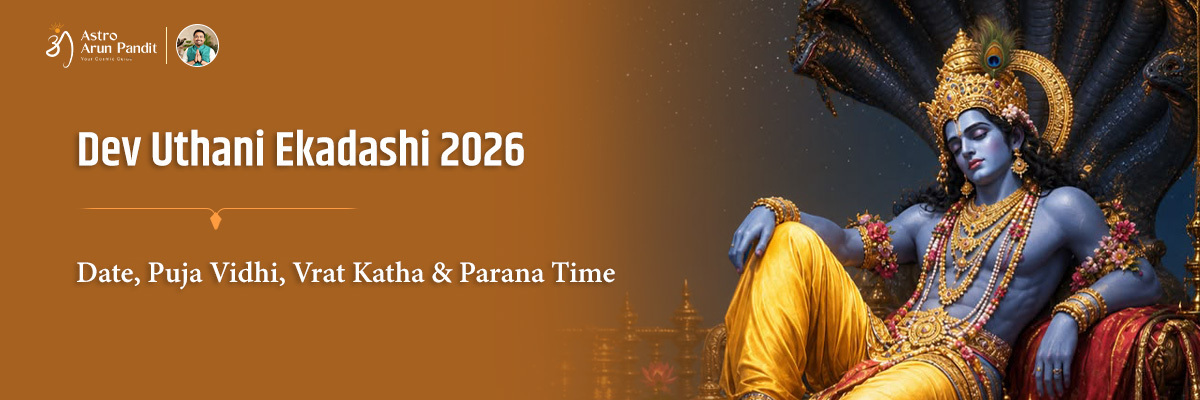
Dev Uthani Ekadashi 2026 will be observed on Friday, 20 November, according to the Smarta tradition, while Vaishnava devotees will observe it on Saturday, 21 November. Also known as Prabodhini Ekadashi, this sacred day commemorates the awakening of Lord Vishnu after four months of Yoga Nidra. Along with this, it marks the start of the Hindu wedding season and the celebration of Tulsi Vivah.
Dev Uthani Ekadashi 2026: Date & Timings
As per Panchang, Dev Uthani Ekdashi is celebrated on Kartik month's Shukla Paksha Ekadashi tithi. In 2026, the Ekadashi Tithi starts on November 20 and ends on November 21's morning. Here are the important dates and timings for New Delhi.
Event | Date and Time (New Delhi) |
Dev Uthani Ekadashi (Smarta) | Friday, 20 November 2026 |
Ekadashi Tithi Begins | 7:15 AM, 20 November |
Ekadashi Tithi Ends | 6:31 AM, 21 November |
Hari Vasara Ends | 12:07 PM, 21 November |
Smarta Vrat Parana | 1:11 PM–3:18 PM, 21 November |
Gauna/Vaishnava Ekadashi | Saturday, 21 November 2026 |
Vaishnava Parana | 6:49 AM–8:56 AM, 22 November |
Tulsi Vivah | Saturday, 21 November |
Tulsi Vivah Godhuli Muhurat | 5:25 PM–5:52 PM, 21 November |
Khatu Shyam Janmotsav | Friday, 20 November 2026 |
Timings are based on the New Delhi Panchang. Local customs and Panchang calculations may differ slightly.
Which Day Should You Keep the Vrat?
If you are confused between these two dates, the difference comes from the fasting traditions followed by devotees. Smarta devotees will observe the vrat on 20 November, while many Vaishnava devotees will observe Gauna Ekadashi on 21 November.
The Ekadashi Tithi continues until 6:31 AM on November 21. Different rules for observing the fast around sunrise lead to these two dates. If you follow a particular temple or family tradition, check its calendar before deciding your fasting day.
Dev Uthani Ekadashi Vrat Katha: The Story Behind the Festival
A popular folk story associated with the Ekadashi Vrat tells of a king whose entire kingdom observed the fast. One day, a man from another kingdom came looking for work. The king agreed to employ him on one condition: he would have to avoid grains on Ekadashi and eat only fasting food.
When Ekadashi arrived, the man felt very hungry and requested regular food. The king finally allowed him to take some flour, rice and lentils. The man went to a riverbank, cooked the food and called out to God to join him. To his surprise, God appeared and ate with him.
The next time Ekadashi came, the man asked for more food, saying that God would be eating with him again. The king found this unusual and secretly watched him. When God did not appear, the man became so upset that he threatened to give up his life. Hearing his sincere call, God appeared once more.
The king realised that true devotion comes from a sincere heart. Different regions follow different versions of the Vrat Katha, so families may read the story followed in their own tradition.
Dev Uthani Ekadashi 2026 Puja Vidhi: Step-by-Step Rituals
Wake up and bathe: Start the day with an early bath and wear clean clothes. Clean the puja area as well.
Take a Vrat Sankalp: Sit before Lord Vishnu's idol or picture, offer prayers and take a Sankalp to observe the fast.
Prepare the puja space: Clean and decorate the area with flowers, rangoli and diyas. Some families draw the footprints of Lord Vishnu using rice flour or geru.
Arrange the offerings: Keep Tulsi leaves, yellow flowers, fruits, sugarcane, seasonal vegetables, incense and a diya ready for the puja.
Worship Lord Vishnu: Offer flowers and Tulsi leaves, light incense and chant Vishnu mantras or names such as "Om Namo Bhagavate Vasudevaya."
Perform the evening awakening ritual: In many homes, devotees ring bells, blow a conch and sing devotional songs to welcome Lord Vishnu. A small sugarcane mandap may also be prepared.
Read the Vrat Katha and perform Aarti: Listen to or read the Dev Uthani Ekadashi Vrat Katha and complete the puja with Aarti.
Observe Parana: Break the fast on the correct Dwadashi date and within the prescribed Parana window.
Fasting rules vary. Some devotees observe a Nirjala fast, while others choose fruits or milk. Follow a form of fasting that is suitable for your health and family custom.
Tulsi Vivah 2026: Date and Shubh Muhurat
It is believed that after waking up from Yoga Nidra, Lord Vishnu marries Tulsi in His Shaligram form, making both festivals closely connected. During this sacred ritual, the Tulsi plant is formally wedded to Shaligram Ji. Some devotees perform the ceremony on the evening of Ekadashi, while many celebrate it the next day on Kartik Shukla Dwadashi.
In New Delhi, Tulsi Vivah 2026 falls on Saturday, 21 November, with the evening Godhuli Muhurat from 5:25 PM to 5:52 PM. Families decorate Tulsi Mata with a chunri and traditional ornaments, prepare a small mandap and perform wedding rituals with Shaligram. You can read our detailed guide to Tulsi Vivah 2026 date, puja vidhi and katha.
Why Do Weddings Begin After Dev Uthani Ekadashi?
During Chaturmas, many Hindu communities traditionally avoid weddings, Griha Pravesh and other major auspicious ceremonies. This period begins with Lord Vishnu's Yoga Nidra on Devshayani Ekadashi and ends with His awakening on Dev Uthani Ekadashi.
Once Chaturmas concludes, the traditional wedding season resumes. Families start looking for suitable dates for marriages and other ceremonies. However, every date after Dev Uthani Ekadashi is not automatically auspicious. You need to check a suitable wedding muhurat for marriage.
Khatu Shyam Janmotsav 2026: Why Is It Celebrated on This Day?
Dev Uthani Ekadashi holds special significance for Khatu Shyam Ji devotees, as His Janmotsav is traditionally celebrated on Kartik Shukla Ekadashi. In 2026, the occasion falls on Friday, 20 November.
Khatu Shyam Ji is worshipped as Barbarik, the grandson of Bhima and son of Ghatotkacha from the Mahabharata. According to popular belief, Barbarik offered his head to Lord Krishna before the Kurukshetra war. Pleased with his devotion, Krishna blessed him to be worshipped by the name Shyam in Kaliyuga. On this occasion, devotees visit the Khatu Shyam Temple in Rajasthan, offer prayers and sing bhajans to seek His blessings.
A Special Message from Astro Arun Pandit Ji on Dev Uthani Ekadashi
Dev Uthani Ekadashi is more than a festival marking Lord Vishnu's awakening. Its traditions also remind us of a few valuable lessons:
Every pause can lead to a new beginning: Lord Vishnu's awakening after four months of Yoga Nidra reminds us that taking time to rest and reflect can prepare us for a fresh start.
Stay connected with nature: The worship of Tulsi and offerings of seasonal fruits remind us to respect nature and appreciate its role in our lives.
Make time for family: The rituals, devotional songs and celebrations bring family members together, keeping traditions alive and strengthening bonds across generations.
As Dev Uthani Ekadashi marks a time of new beginnings, it can also be a good opportunity to understand your own life's path. Create your free Kundli using Astro Arun Pandit Ji's Free Kundli Calculator by entering your birth date, time and place.
Conclusion
Dev Uthani Ekadashi marks the end of Chaturmas and the return of many auspicious ceremonies. From Lord Vishnu's awakening and the Ekadashi Vrat to Tulsi Vivah and Khatu Shyam Janmotsav, the day brings several traditions together. Follow your family's observance and check the local Panchang for the correct timings.

