

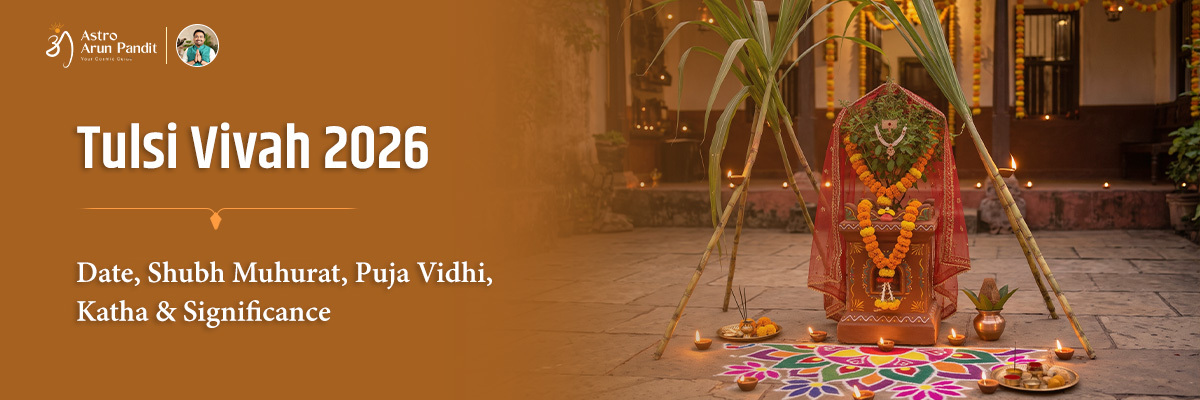
The month of Kartik brings many Hindu festivals, and Tulsi Vivah 2026 is one of them. This year, Tulsi Vivah will be celebrated on November 21, 2026 (Kartik Shukla Dwadashi tithi). Now, have you ever wondered why a Tulsi plant is dressed like a bride and married to Shaligram? There is an interesting story behind it. If you are planning to celebrate it at home, here is everything you need to know about the date, shubh muhurat, katha, significance and puja vidhi.
Tulsi Vivah 2026 Date and Shubh Muhurat
Tulsi Vivah is generally observed during Kartik Shukla Paksha’s Dwadashi tithi. It marks the closure of Chaturmas, and is traditionally celebrated a day after Devuthani Ekadashi.
Details | Tulsi Vivah 2026 (New Delhi) |
Tulsi Vivah Date | November 21, 2026 |
Day | Saturday |
Tithi | Kartik Shukla Dwadashi |
Dwadashi Begins | 6:31 AM, November 21 |
Dwadashi Ends | 4:56 AM, November 22 |
Shubh Muhurat | 05:25 PM to 07:49 PM |
Deities | Tulsi Mata and Shaligram (Lord Vishnu) |
Tulsi Vivah is commonly performed in the evening, much like a traditional wedding ceremony. Since local customs and suitable puja timings may differ by location, check your city’s Panchang before beginning the rituals.
What Is Tulsi Vivah and Why Is It Celebrated?
Tulsi Vivah is the ceremonial wedding of the holy Tulsi plant to Shaligram (stone form of Lord Vishnu). It is observed every year to honour Lord Vishnu's divine promise to Vrinda. In some families, an idol of Lord Vishnu or Krishna is used when Shaligram is not available.
The celebration marks the end of the Chaturmas period, when auspicious ceremonies such as Hindu weddings traditionally begin again, symbolizing the power of devotion, faith, and sacred beginnings.
Religious Significance of Tulsi Vivah
Tulsi Vivah turns a simple home puja into a symbolic wedding celebration. Families decorate Tulsi Mata as a bride, prepare a mandap and perform marriage rituals with Shaligram.
According to traditional beliefs:
Performing Tulsi Vivah is associated with the punya of Kanyadaan.
Tulsi and Vishnu worship is believed to bring prosperity and well-being to the family.
The festival represents devotion, purity and commitment.
It marks the return of an auspicious period for weddings and other manglik ceremonies.
Married couples traditionally pray for harmony and happiness in their relationship.
Facing marriage delays? Get clarity on marriage timing and remedies with a personalised Kundli analysis at Astro Arun Pandit.
Tulsi Vivah Katha: Story of Vrinda and Lord Vishnu
Tulsi Vivah Katha revolves around the story of Vrinda and Lord Vishnu.
Vrinda was married to the demon Jalandhar. Her deep devotion to him made him so powerful that no one could defeat him. To end his cruelty, Lord Vishnu disguised himself as Jalandhar to break her trust. Once this happened, Jalandhar was killed in battle.
When Vrinda discovered the trick, she cursed Vishnu to turn into a black stone, which is worshipped today as Shaligram. Seeing her true love and devotion, Vishnu blessed her to be reborn as the sacred Tulsi plant and promised to marry her every year.
Tulsi Vivah is the yearly wedding that celebrates this promise.
Tulsi Vivah Puja Samagri
A healthy Tulsi plant
Shaligram or an idol of Lord Vishnu/Krishna
Red chunri and simple shringar items
Sugarcane sticks for the mandap
Flowers and garlands
Haldi, kumkum, roli, chandan and akshat
Mauli or kalava
Ghee diya and incense
Fruits and sweets for bhog
Panchamrit
Tulsi Vivah Puja Vidhi: How to Perform It at Home?
Performing Tulsi Vivah at home can be simple and meaningful, with these steps.
1. Prepare the Puja Area
Clean the puja space, and area around the tulsi plant. Take a bath, wear clean clothes and arrange puja samagri.
2. Decorate Tulsi Mata
Place a red chunri around the plant and use shringar items to prepare Tulsi Mata as a bride.
3. Prepare the Mandap
Sugarcane sticks are traditionally used to create a small mandap(setup). Decorate it simply with flowers.
4. Place Shaligram
Place Shaligram or an idol of Lord Vishnu/Krishna near Tulsi Mata. Apply chandan and offer flowers.
5. Take the Sankalp
Pray to Tulsi Mata and Lord Vishnu, and take a sankalp to perform the ceremony with devotion.
6. Perform the Wedding Rituals
Offer haldi, kumkum and flowers. A mauli may be used to symbolically join (gathbandhan) Tulsi Mata and Shaligram while family members sing traditional wedding songs.
7. Complete the Pheras
Perform symbolic wedding rounds according to your family tradition while remembering Tulsi Mata and Lord Vishnu.
8. Offer Bhog and Perform Aarti
Offer fruits, sweets or other satvik food as bhog. Complete the ceremony with aarti and distribute prasad among family members.
Note: The exact rituals may vary according to family and regional traditions.
Common Mistakes to Avoid on Tulsi Vivah
Plucking Tulsi leaves on the day: Pluck any required leaves a day in advance.
Using non-satvik items: Avoid garlic, onions, or non-traditional materials during the puja.
Focusing on Grandeur: The ritual values sincerity and simplicity over extravagant setups.
Conclusion
Tulsi Vivah 2026, celebrated on Saturday, November 21, brings together the devotion of Tulsi Mata, the worship of Lord Vishnu and the joy of a traditional wedding ceremony. Whether you arrange a complete Tulsi-Shaligram Vivah or perform a simple puja at home, the festival is ultimately about faith, devotion and welcoming an auspicious period for new beginnings.

