

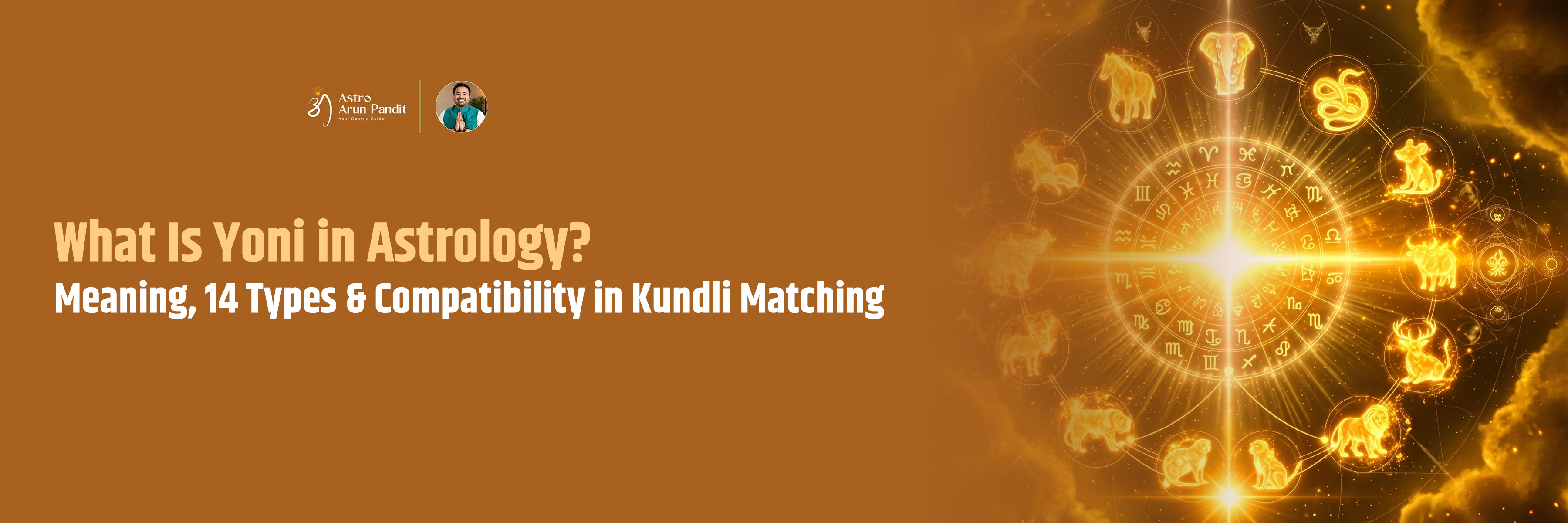
Have you ever wondered What is Yoni and why Yoni matching is considered important when checking marriage compatibility through Kundli? In Vedic astrology, Yoni represents the natural instincts, physical attraction and intimate compatibility of two individuals. It is one of the eight factors considered in Ashtakoota Guna Milan. There are 14 types of Yoni, each represented by an animal and associated with specific Nakshatras.
What Does Yoni Mean in Vedic Astrology?
In Sanskrit, yoni means "source" or "origin". In Vedic astrology, it is one of the eight kootas (factors) used in Ashtakoota matching. Each person gets an animal symbol, such as a horse, elephant or serpent, based on their Janma Nakshatra (the star group the Moon was in at birth).
The animal describes your instinctive side, meaning how you express affection and how you respond to closeness. Think of it as a traditional personality sketch, not a fixed destiny.
What Is the Importance of Yoni in Kundli Matching?
Yoni Koota is the fourth factor in Ashtakoota Guna Milan and carries a maximum of 4 points out of 36. It is mainly used to assess physical attraction, intimate understanding and natural compatibility between two partners.
During Kundli matching, the Yonis of both individuals are compared. Their relationship is classified according to traditional compatibility rules.
A favourable Yoni match is traditionally considered supportive of:
Physical attraction and intimacy.
Mutual understanding between partners.
Comfort and harmony in married life.
However, Yoni matching is only one part of the process. Other factors, such as Nadi, Bhakoot, Gana and the overall birth charts, should also be considered.
What Are the 14 Types of Yoni in Astrology?
There are 14 Yonis in Vedic astrology, each represented by an animal and their characteristics. These are assigned to the 27 Nakshatras.
Yoni (Animal) | Associated Nakshatras | Characteristics |
Ashwa (horse) | Ashwini, Shatabhisha | Energy, independence and enthusiasm |
Gaja (elephant) | Bharani, Revati | Strength, patience and stability |
Mesha / Aja (sheep or goat) | Krittika, Pushya | Gentleness and adaptability |
Sarpa (serpent) | Rohini, Mrigashira | Alertness and sensitivity |
Shwan (dog) | Ardra, Mula | Loyalty and protectiveness |
Marjara (cat) | Punarvasu, Ashlesha | Independence and alertness |
Mushaka (rat) | Magha, Purva Phalguni | Curiosity and quick instincts |
Gau (cow) | Uttara Phalguni, Uttara Bhadrapada | Nurturing and calmness |
Mahisha (buffalo) | Swati, Hasta | Endurance and determination |
Vyaghra (tiger) | Chitra, Vishakha | Courage and strength |
Mriga (deer) | Anuradha, Jyeshtha | Sensitivity and gentleness |
Vanara (monkey) | Purva Ashadha, Shravana | Playfulness and activity |
Nakula (mongoose) | Uttara Ashadha | Alertness and courage |
Simha (lion) | Dhanishta, Purva Bhadrapada | Confidence and leadership |
These characteristics are traditional symbolic interpretations, not fixed personality predictions.
What Is Male and Female Yoni in Astrology?
In Vedic astrology, each Yoni is traditionally divided into male and female forms. These classifications are assigned through the birth Nakshatras. For example: Ashwini represents Male Ashwa Yoni, whereas Shatabhisha represents Female Ashwa Yoni. Similarly, Bharani represents Male Gaja Yoni and Revati represents Female Gaja Yoni.
This classification is based on traditional astrological calculations, not the actual gender of the person. A man or woman can belong to either classification depending on their birth Nakshatra.
One special case is Nakula Yoni (Mongoose), which is traditionally associated with Uttara Ashadha Nakshatra alone.
How Does Yoni Matching Work in Kundli Matching?
Yoni matching compares the animal symbols of two people's birth Nakshatras. Their compatibility is assessed using traditional friendship and enemy relationships between animals. The traditional scoring ranges from 0 to 4 points.
Relationship | Points |
Same yoni | 4 |
Friendly yoni | 3 |
Neutral yoni | 2 |
Unfriendly (or opposite) yoni | 1 |
Enemy yoni | 0 |
Cat and Rat, Serpent and Mongoose, and Lion and Elephant are traditionally considered enemy combinations.
Which Is the Best Yoni in Astrology for Marriage?
There is no single best Yoni in astrology for marriage. The compatibility of two Yonis matters more than the individual animal symbol. For example, two people with the same Yoni generally receive the highest score of 4 points in Yoni Koota. However, a good marriage cannot be judged through Yoni alone. Guna Milan, Nadi, Bhakoot, Gana, and the overall birth chart should also be considered.
How to Find Your Yoni in Astrology?
Gather your exact birth details like date, time, and place of birth.
Generate your Vedic birth chart (Kundli).
Find your Janma Nakshatra (birth star).
Check which animal Yoni is associated with that Nakshatra.
What Happens If the Yoni Matching Score Is 0?
A Yoni matching score of 0 means that the two animal Yonis are traditionally considered natural enemies. This combination is sometimes called Yoni Dosha. However, it does not automatically mean that the marriage will be unsuccessful.
Remember, Yoni Koota carries only 4 points out of 36 in Ashtakoota Guna Milan. Therefore, astrologers should consider the complete Kundli, including other Gunas and relevant planetary placements, before reaching a conclusion. You can also book astrologer consultation at Astro Arun Pandit.
Conclusion
Yoni in astrology is an important factor in traditional Kundli matching that helps assess physical attraction and intimate compatibility between two individuals. The 14 Yonis, their Nakshatra associations and compatibility scores offer one perspective on a couple's relationship.
However, Yoni matching alone cannot determine the future of a marriage. For a balanced assessment, it is important to consider all aspects of Kundli matching and the overall birth charts.

